
Last updated September 25, 2026
ADU Warning Signs: A Westchester Homeowner’s Reference Guide
The most expensive ADU disaster we’ve seen in the Westchester market wasn’t a structural failure - it was a contractor who pulled a permit under a different address, built without inspections, and disappeared, leaving the homeowner with an unpermitted structure and a $210,000 abatement notice. That project looked fine from the curb. The concrete was smooth, the windows were plumb, and the tenant had already moved in. The warning signs were all in the paperwork: a contract with no permit number, a bid with undefined “allowances” that ballooned 340%, and an owner-builder application the contractor convinced the homeowner to sign.
We’ve designed, permitted, and built over 900 ADUs since 2015, the year California’s ADU laws began their major shift. In Westchester specifically, where lots are tight, the coastal climate accelerates material degradation, and LADBS scrutiny runs high, the projects that fail almost always fail because of what the homeowner didn’t know to look for in the documents. This guide - along with our more guides & resources - teaches you to read bids, contracts, and permit documents like a design-build studio reads them, so you can identify a bad actor before a single shovel breaks ground.
Quick Answer
The critical warning signs of a failing ADU project in Westchester are documentary, not physical: undefined allowances in bids, missing permit numbers in contracts, owner-builder applications pushed onto homeowners, and work proceeding without inspection sign-offs. A legitimate design-build operation will show you a written price before work starts, name the specific permit on the contract, and provide a documented photo record of every site visit.
Table of Contents

- Document Red Flags: Reading Bids and Contracts Like a Professional
- License Red Flags: Verifying Who You’re Actually Hiring
- Permit Red Flags: The Owner-Builder Trap and Other LADBS Schemes
- Construction Red Flags: What Happens On-Site When Documentation Fails
- Post-Construction Red Flags: The Certificate of Occupancy and Beyond
- Westchester-Specific Risks: Coastal Climate, Tight Lots, and Local Code
- How to Vet a Design-Build Studio: A Seven-Step Checklist
- Common Mistakes to Avoid
- When to Call a Professional
- Frequently Asked Questions
Document Red Flags: Reading Bids and Contracts Like a Professional
The bid is where most ADU projects begin their death spiral. Not because the price is too high or too low, but because the document itself is structured to obscure what the price actually covers.
Here are the three document warning signs we see most often in Westchester, where homeowners are often comparing a garage conversion bid against a new detached ADU quote and struggling to align the two. For a deeper look at the full process, see The Complete Guide to ADU in Westchester.
Undefined “Allowances”
An allowance is a placeholder dollar amount for a selection the homeowner hasn’t made yet - tile, fixtures, flooring. The red flag is not the allowance itself; it’s the absence of a defined scope attached to that dollar figure. We’ve reviewed bids where “kitchen allowance: $8,000” appeared with no line item for cabinets, no specification for countertop material, no square footage of flooring covered. Under Haven Standard Clause 1, every project we quote carries a written price with every allowance defined by brand, material grade, and quantity. A bid that says “allowances as needed” or “to be determined” is a bid that will grow.
“Per Plans” With No Plans
This phrase appears in contracts more often than you’d expect. The scope of work states “electrical per plans” or “foundation per plans,” but the permit set hasn’t been drawn, submitted, or approved. What this means in practice: the contractor can claim almost anything was outside scope once the real plans surface. In our ADU Design & Permitting in Westchester process, the permit set is the first deliverable, not an afterthought. The contract references specific drawing numbers and revision dates. If your contract says “per plans” and the plans don’t exist yet, you don’t have a contract. You have a handshake with liability.
The Missing Permit Number
A legitimate ADU contract in Westchester should name the LADBS permit application number or, if pre-application, the specific date by which the permit will be pulled and the party responsible for pulling it. Our How to Hire a ADU Contractor in Westchester: A Step-by-Step Guide covers this verification in detail. We’ve seen contracts where the permit responsibility is simply absent, and others where it’s buried in a clause assigning the task to the homeowner. If the contract is silent on permits, or if the contractor suggests they’ll “handle it later,” the project is already off track.
Our documentation protocol, governed by The Haven Standard, requires that every client receive: a written price before any work starts (Clause 1), a permit set with LADBS submission confirmation, and a documented photo record on every site visit showing what was found and what was done. These aren’t comfort items. They’re evidence.
License Red Flags: Verifying Who You’re Actually Hiring
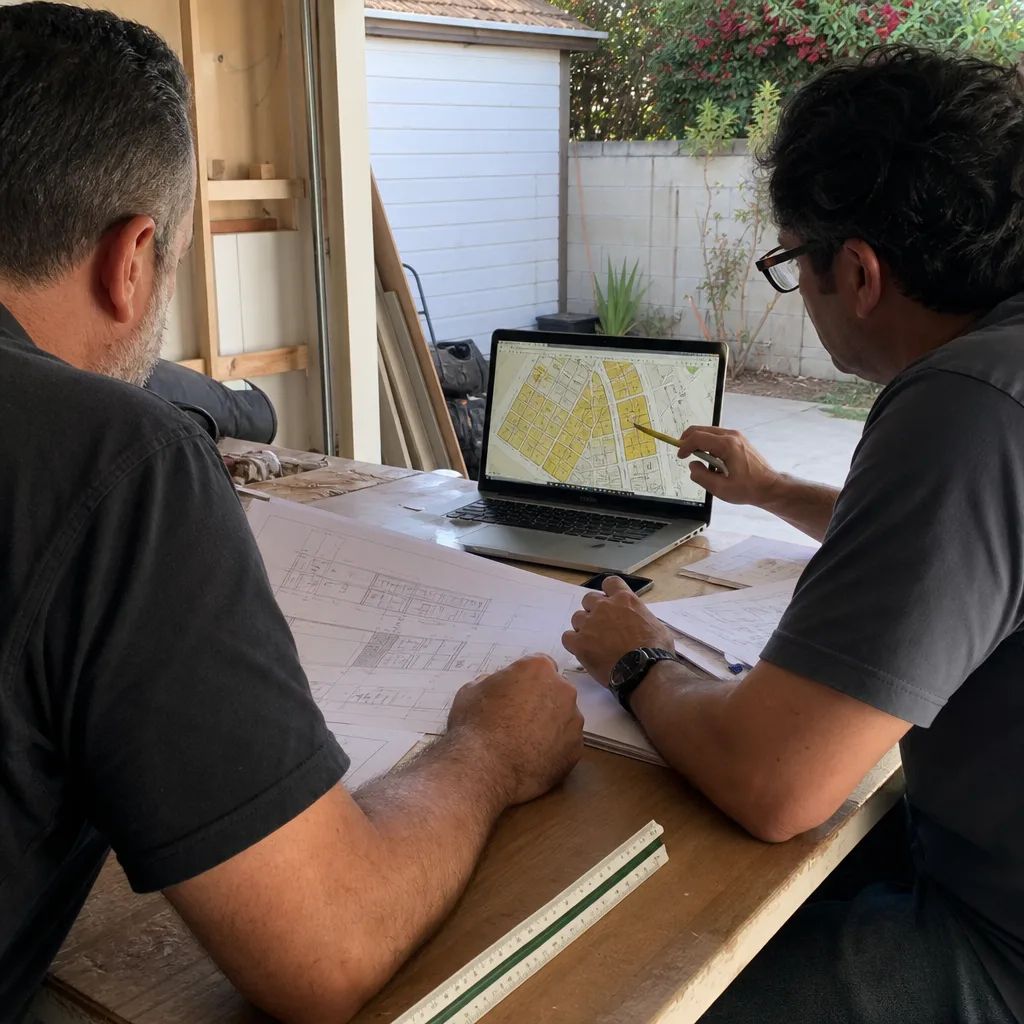
California contractor licensing is public, searchable, and specific - which makes the frequency of license fraud in ADU work all the more troubling. Here’s how to verify who you’re actually contracting with.
CSLB Classification Mismatches
A C-5 Framing and Rough Carpentry contractor cannot legally perform electrical, plumbing, or HVAC work. A B General Building contractor can, but only if the project involves two or more unrelated trades and the contractor holds the appropriate specialty classifications or uses properly licensed subcontractors. We’ve reviewed bids in Westchester where a C-5 license holder quoted full MEP (mechanical, electrical, plumbing) work without naming any subcontractors. That’s not a gray area. That’s unlicensed work, and if something fails, the CSLB won’t help you recover.
To check: visit cslb.ca.gov and enter the license number. Verify the classification matches the work described. Verify the business name on the license matches the entity signing your contract exactly. Verify the workers’ compensation certificate is current and covers the type of work being performed.
The Name Mismatch
The license holder, the contracting entity, and the person signing your documents should be the same. We’ve encountered situations where a well-known license number appears on marketing materials, but the actual contract is signed by an LLC with no CSLB record. Or where the license is held by an individual who “partners” with various unlicensed entities. The CSLB lookup takes 90 seconds. The abatement process takes 18 months.
Lapsed Workers’ Compensation
In California, contractors without employees can file an exemption. But if workers appear on your site and the contractor claims exemption, that’s a violation. More commonly, we see expired workers’ comp certificates presented as current. The certificate should name your specific project address and show coverage dates that encompass your construction timeline. If a worker is injured and coverage lapsed, the liability pathway leads directly to the homeowner.
At Ellery ADU Studio Westchester, our license number appears on every page of our site and every document we issue. Our technicians and crews are background-checked and uniformed. We don’t consider this marketing. It’s the minimum standard for a design-build studio handling six-figure projects.
Permit Red Flags: The Owner-Builder Trap and Other LADBS Schemes
Los Angeles Department of Building and Safety processes thousands of ADU permits annually. The system is complex, and complexity creates openings for operators who understand the gaps better than the homeowners they’re soliciting.
The Owner-Builder Application
This is the most dangerous permit scheme we see in Westchester. A contractor suggests the homeowner sign the permit application as “owner-builder,” explaining that it “saves time” or “reduces fees.” What this actually does: transfers all permit liability, inspection responsibility, and code compliance burden from the contractor to the homeowner. If the work fails inspection, the city contacts the owner-builder. If the work is done without inspection, the owner-builder faces the abatement notice. If a subcontractor isn’t paid, the owner-builder may face a mechanics lien. The contractor, having avoided pulling the permit, has no direct relationship with LADBS and often no recoverable contractual obligation.
We’ve worked with Westchester homeowners who discovered they were listed as owner-builder years after project completion, when they attempted to refinance and the unpermitted work appeared in a title search. The original contractor was dissolved. The remedy was a full permit retrofit, often costing more than the original construction.
Permit Pulling Under Wrong Address or APN
The $210,000 abatement case we opened with involved exactly this: a contractor pulled a permit under a neighboring address, built the ADU, and the structure never appeared in LADBS records for the actual property. The homeowner discovered this when a code enforcement sweep of the Westchester neighborhood matched physical structures against permit databases. Always verify that the permit application lists your exact address and Assessor’s Parcel Number (APN). Cross-reference the permit number in the LADBS online system before work begins.
“Waived” Inspections
No LADBS inspection is waivable by a contractor. Final inspection, rough inspection, foundation inspection - each requires sign-off by a city inspector. A contractor who claims to have “a guy at the city” or says an inspection was “handled informally” is describing a bribe or a fiction. Either way, your certificate of occupancy doesn’t exist, and your ADU cannot be legally occupied or rented.
Our Garage Conversion ADU in Westchester process includes permit submission, correction response, and inspection scheduling as core deliverables. The permit set is not a favor we do for the client. It is the product that makes construction possible.
Construction Red Flags: What Happens On-Site When Documentation Fails

By the time construction begins, the documentary warning signs should have already surfaced. But some homeowners only recognize problems when they see physical evidence. Here’s what to watch for during the build phase.
Work Proceeding Before Inspection Sign-Offs
Foundation concrete poured before the footing inspection. Drywall hung before the rough MEP inspection. Roofing completed before the framing inspection. Each of these represents a code violation and a concealment risk. If defective work is covered, the cost to expose and correct it multiplies. A legitimate contractor in Westchester schedules inspections as a matter of course and stops work when required. A contractor who “doesn’t want to wait for the inspector” is avoiding scrutiny, not saving time.
Subcontractors Who Can’t Identify the General
Ask the electrician on your site who the general contractor is. Ask the plumber who hired them. If the answer is vague, or if the subcontractor claims to be working directly for you, you may have a de facto owner-builder situation despite having paid a general contractor. This is common in cash-flow-distressed operations where the GC has taken your deposit, failed to pay subs, and the subs are now attempting to collect directly from the property.
Verbal Change Orders
Every change to scope, every price adjustment, every schedule shift must be in writing with a specific dollar amount and both parties’ signatures. Verbal change orders are the primary driver of ADU cost overruns in our experience. Under Haven Standard Clause 5 (No Surprises), our scope is locked at signing. If a condition requires change - unexpected soil conditions, concealed damage, code interpretation shift - we document it with photos, provide a written price for the revision, and obtain signed approval before proceeding. No door-side upsells. No “while we’re here” additions.
Missing or Incomplete Photo Documentation
A contractor who cannot show you dated photos of what was found and what was done is a contractor who cannot prove their work. Our documented photo record protocol means every client receives visual evidence of each site visit: the condition before, the work performed, the inspection result. This isn’t for marketing. It’s for dispute resolution, for warranty claims, and for the eventual property sale when the buyer’s inspector asks about the ADU provenance.
Post-Construction Red Flags: The Certificate of Occupancy and Beyond
The project looks complete. The contractor has been paid. The tenant has moved in, or the family member has settled. This is when the most insidious warning signs surface - because the urgency of construction is over, and the homeowner’s attention has moved on.
The Missing Certificate of Occupancy
In Los Angeles, no ADU can be legally occupied without a Certificate of Occupancy (CofO) or equivalent final sign-off. We’ve worked with Westchester homeowners who rented their ADU for two years before discovering no CofO had ever been issued. The tenant was technically in illegal housing. The rental income was unreportable. The homeowner’s insurance could have denied a claim. The correction required full re-inspection, including exposure of covered systems, at significant cost.
Always request the final LADBS sign-off document before making final payment. Verify it in the online system. The document should name your address, your APN, and the specific permit number.
Utility Connections That Bypass the Meter
This is more common in garage conversions and junior ADUs than new detached units. A contractor “saves money” by tapping into existing electrical or gas service without separate metering, or by connecting to the main sewer line without proper backflow prevention. In Westchester, where LADWP and the Bureau of Sanitation maintain strict separation requirements, this creates both code violations and ongoing utility disputes. The correct configuration - separate meters, proper service sizing, approved connection methods - should be specified in the permit set and verified at final inspection.
Warranty Documents That Reference Nonexistent Permits
A workmanship warranty is only as good as the work it describes. If the warranty references “permit #XXXXX” and that permit doesn’t exist, or references “work per approved plans” and no plans were approved, the warranty may be unenforceable. The Haven Standard’s 365-Day Done Right Promise is backed in writing before the project starts, with specific reference to the permitted drawings and inspection record. A warranty without documentation is a promise without proof.
Westchester-Specific Risks: Coastal Climate, Tight Lots, and Local Code
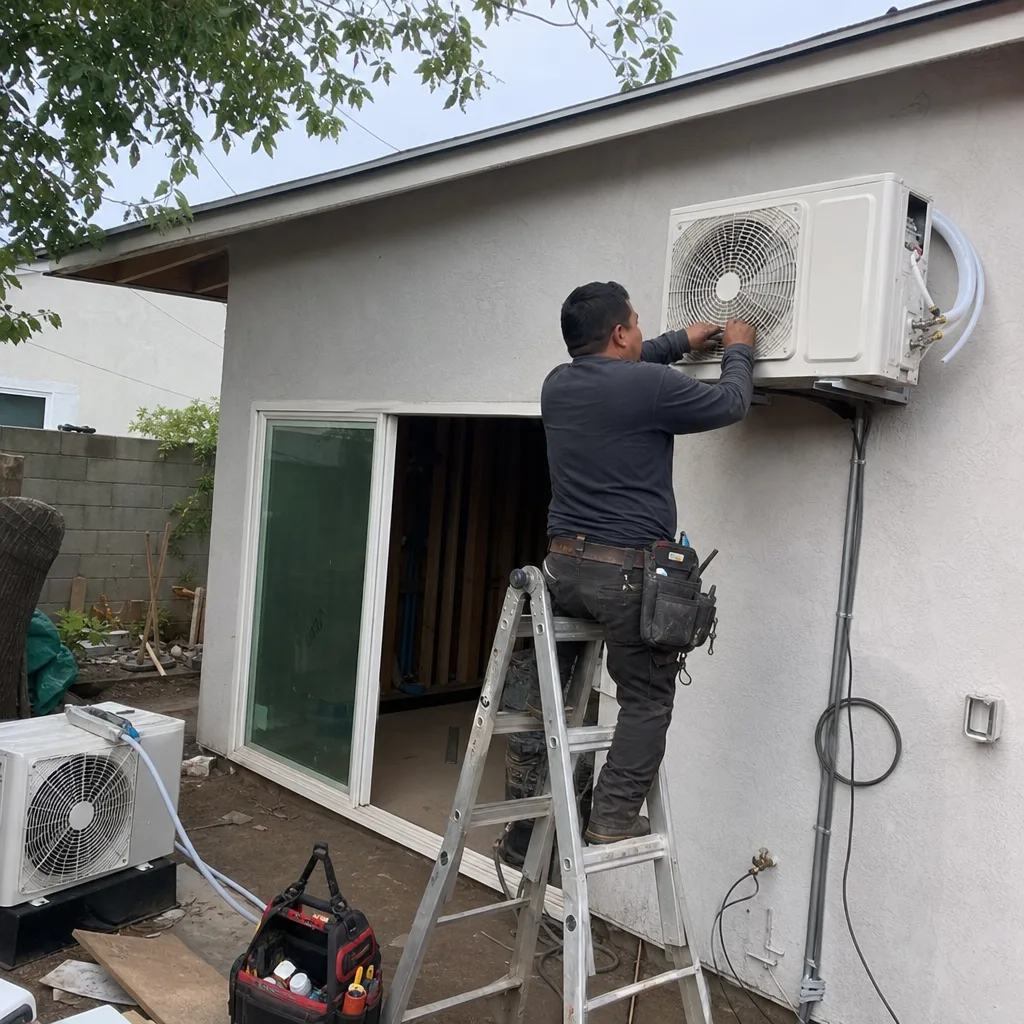
Westchester’s geography creates ADU complications that don’t apply uniformly across Los Angeles. Understanding these local conditions helps explain why documentation discipline matters more here than in markets with more forgiving sites.
Coastal Climate and Material Selection
Westchester sits within the marine layer influence zone, with higher humidity and salt exposure than inland neighborhoods. We’ve seen ADUs in Westchester where contractors specified standard-grade fasteners and untreated wood framing that deteriorated within five years. The permit set should specify corrosion-resistant hardware, proper vapor barrier placement, and exterior finishes rated for coastal exposure. James Hardie fiber cement siding, for example, carries specific coastal installation requirements that differ from inland applications. A contractor who doesn’t ask about your lot’s specific exposure - north-facing shade, south-facing sun load, proximity to the bluff - hasn’t done the analysis that a documented permit set requires.
Setback and Height Constraints on Tight Lots
Westchester lots average 5,000-6,000 square feet, many with irregular shapes from mid-century subdivisions. The setback variance - the extra distance the city requires between your new ADU and the property line - can consume surprising area. A contractor who eyeballs setbacks without a surveyed site plan is guessing. A design-build studio produces a permit set with dimensioned site plans showing exact compliance. We’ve seen projects where a contractor built to what “looked right,” only to have LADBS require partial demolition for setback violation.
Access and Utility Routing
Westchester’s street grid and mature tree canopy create practical constraints on construction access and utility routing. A new detached ADU may require trenching through established root systems. A garage conversion may need electrical service upgrades that require LADWP coordination. These aren’t obstacles that yield to enthusiasm. They’re conditions that require planning, documentation, and permit coordination. Our New Detached ADU in Westchester process includes utility feasibility assessment before any price is quoted, because the utility path can determine whether the project is viable at all.
For homeowners considering prefab or modular systems, we specify and coordinate brands including Boxabl, Plant Prefab, and Tuff Shed within our single-contract model. The crane access, foundation prep, and utility connections for these systems require the same documentation rigor as site-built work - sometimes more, because the module arrives complete and the site must be ready.
How to Vet a Design-Build Studio: A Seven-Step Checklist
Use this checklist when evaluating any ADU provider in Westchester. Each step can be completed before signing anything.
- Verify the license. Enter the number at cslb.ca.gov. Confirm classification matches scope. Confirm business name matches contract. Confirm workers’ comp is current.
- Request a sample permit set. A design-build studio should show you a redacted example of what you’ll receive. Look for dimensioned plans, structural details, energy calculations, and LADBS stamp simulation.
- Demand defined allowances. Every placeholder dollar should have a material specification attached. “Tile allowance” should state square footage, grade, and installation method.
- Confirm permit responsibility. The contract should name who pulls the permit, by when, and at what address. Owner-builder status should never be suggested.
- Ask about photo documentation. What evidence will you receive of each site visit? When and how? Summary emails are insufficient; dated photos of actual conditions are required.
- Request the warranty in writing. Before project start, not after completion. It should reference specific permit numbers and permitted drawings.
- Verify the price is fixed. Under Haven Standard Clause 1, our written price is the price. No change orders without written approval of specific dollar amounts. Ask any provider: “Will this number increase without my signed approval?”
We offer a Free Second Opinion on any written estimate already in hand. Bring us a competitor’s bid and we’ll identify the warning signs - undefined allowances, missing permit language, classification mismatches - at no charge. This isn’t altruism. It’s how we demonstrate the difference between a contractor’s quote and a design-build studio’s documented process.
Common Mistakes to Avoid
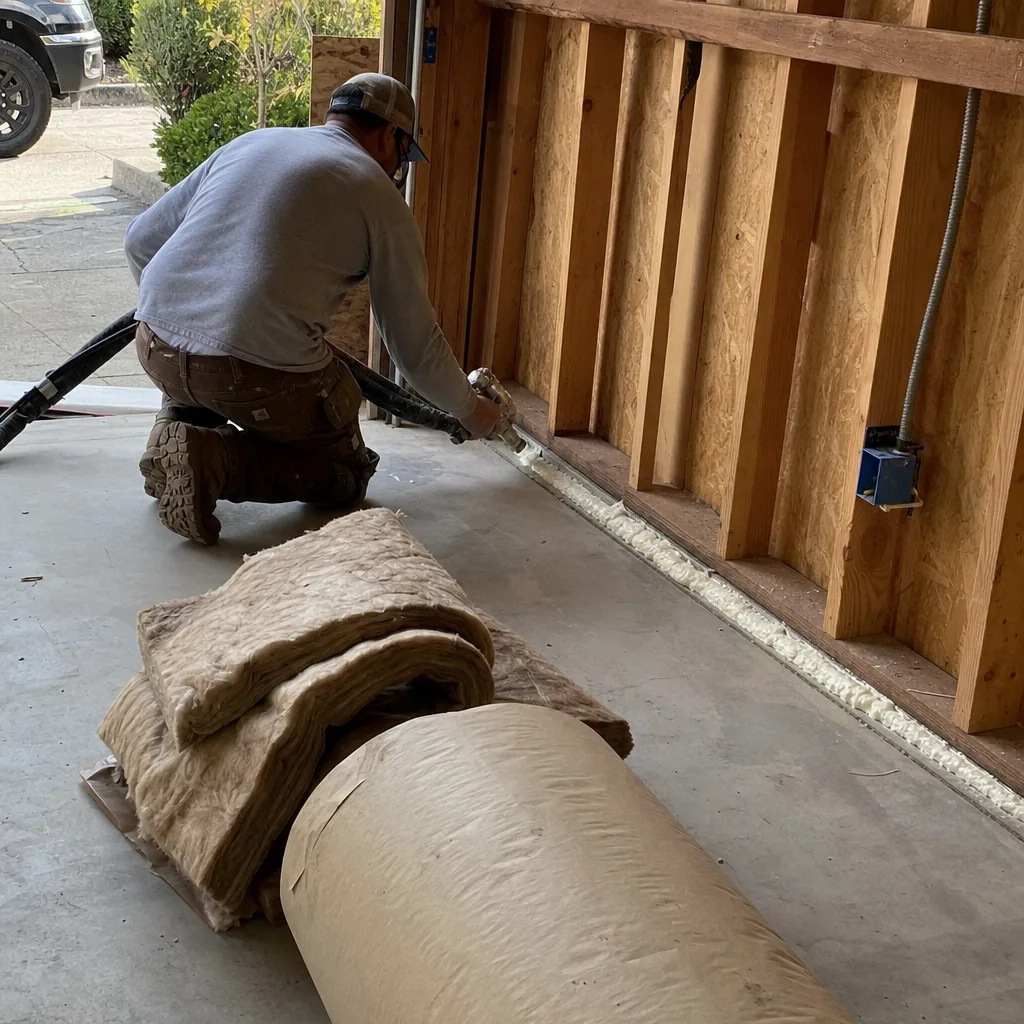
- Comparing bids that don’t describe the same scope. A $85,000 garage conversion bid with undefined flooring against a $120,000 bid with specified finishes isn’t a $35,000 savings. It’s an incomplete comparison. Line-item every material and method before evaluating price.
- Assuming a contractor’s license covers all trades. In Westchester, we’ve seen homeowners discover mid-project that their B-general contractor had subcontracted electrical to an unlicensed operator. Verify every trade, every time.
- Signing owner-builder applications for “convenience.” No legitimate design-build studio needs this. The convenience is entirely the contractor’s, at your expense.
- Paying for completed work without inspection sign-off. The standard draw schedule ties payment to documented progress, not calendar dates. Final payment should follow final inspection, never precede it.
- Accepting verbal assurances about permits. “Don’t worry, it’s handled” is not a permit strategy. Request the LADBS confirmation number and verify it online.
- Neglecting to specify coastal-grade materials. Westchester’s marine layer will degrade standard materials faster than inland locations. The permit set should specify appropriate hardware and finishes, not leave selection to jobsite discretion.
- Treating prefab as simpler. Modular systems from brands like Plant Prefab or Boxabl reduce on-site construction time but increase coordination complexity. Foundation precision, crane access, and utility rough-in timing become more critical, not less.
When to Call a Professional
Call a design-build studio when you have a written estimate that doesn’t make sense - undefined terms, missing permit language, or a price that seems disconnected from the described scope. If you’re weighing self-management against hiring out, read DIY vs Professional ADU: The Westchester Homeowner’s Decision Guide first. Call when you’ve been asked to sign as owner-builder and need to understand the liability you’re accepting. Call when construction has begun and inspections aren’t being scheduled, or when subcontractors are appearing without clear chain of command.
Ellery ADU Studio Westchester offers free estimates in Westchester - call (213) 698-7591. Every estimate includes a written price before any work starts, per Haven Standard Clause 1. We also provide Free Second Opinions on any written estimate already in hand, with specific identification of the warning signs this guide describes. A live person answers calls 24/7.
Frequently Asked Questions
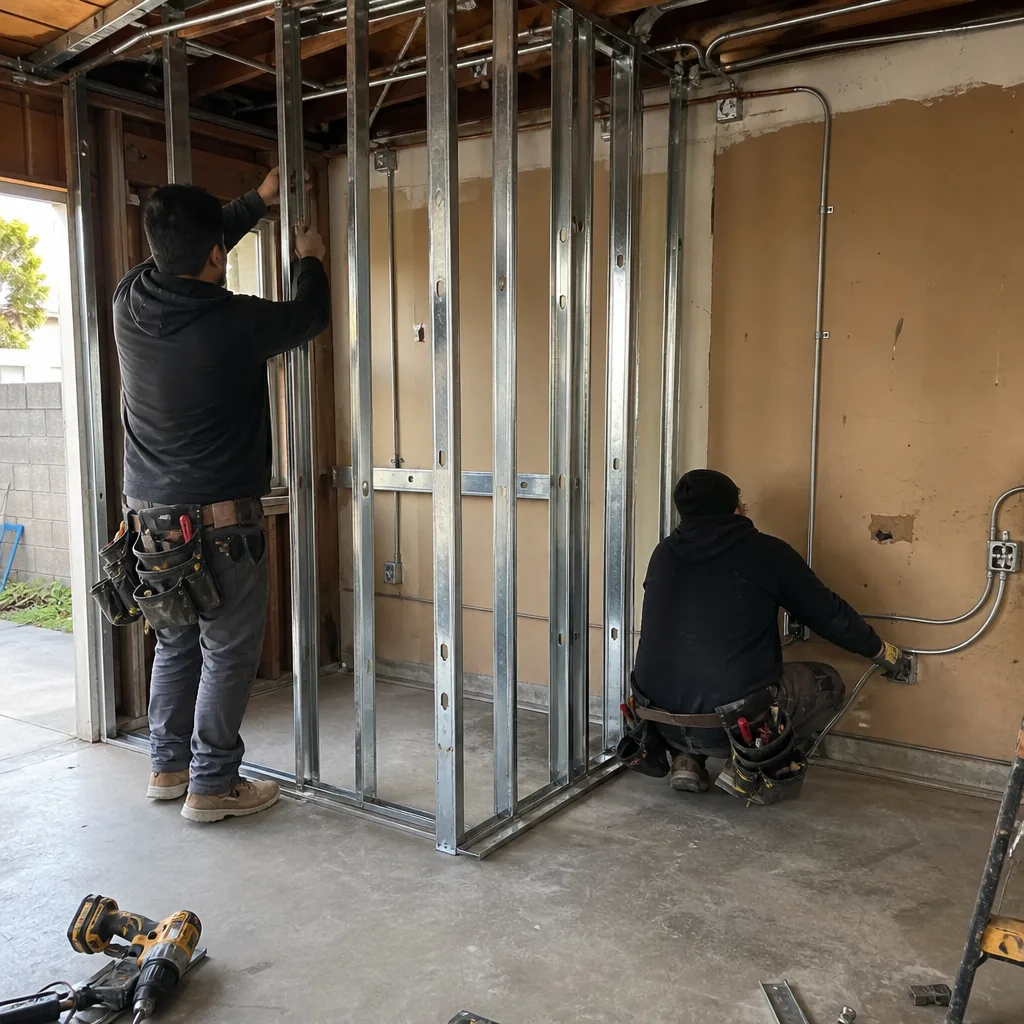
Garage conversion ADUs in Westchester typically run $95,000-$165,000 all-in, drawings through final inspection, while new detached ADUs generally range $220,000-$380,000 depending on size, utility complexity, and finish level. Every project we quote carries a written price before any work starts, per Haven Standard Clause 1 - call (213) 698-7591 for an exact quote; estimates are free.
Owner-builder status on a California permit application makes the homeowner legally responsible for all code compliance, inspection scheduling, and subcontractor payment - the contractor avoids liability entirely. If your contractor suggests this arrangement, it’s a permit red flag that should end the conversation immediately.
Visit cslb.ca.gov and enter the license number. Verify the classification matches your project scope, the business name matches your contract exactly, and workers’ compensation coverage is current. This takes under two minutes and can prevent six-figure losses.
No. All ADUs in Los Angeles, including Westchester, require LADBS permits, inspections, and a Certificate of Occupancy. Unpermitted ADUs face abatement notices, cannot be legally rented, and create title issues on sale. The permit set is the foundational document that makes legal construction possible.
A contractor bid typically covers construction only, with design and permitting treated as separate, uncoordinated contracts. A design-build quote from Ellery ADU Studio Westchester home includes drawings, permit set, and construction under one contract at one written price, eliminating the designer-versus-builder blame gap. The permit set is the core product, not an afterthought.
LADBS ADU permit review in Los Angeles currently averages 8-16 weeks for complete submissions, with corrections adding 2-6 weeks per cycle. Incomplete submissions - common with contractor-led applications that lack professional permit sets - extend this significantly. Our documented permit process includes pre-submission review to minimize correction cycles.
Stop occupancy immediately, verify the permit status at ladbs.org, and consult a design-build studio or real estate attorney before contacting the city. Voluntary disclosure with a remediation plan generally produces better outcomes than code enforcement discovery. Ellery ADU Studio Westchester can assess the situation and provide a path to compliance - call (213) 698-7591.
The Bottom Line
The ADU projects that fail in Westchester rarely fail because of bad luck or impossible sites. They fail because homeowners couldn’t read the warning signs in the documents: the undefined allowance that became a 340% overrun, the owner-builder application that transferred all liability, the missing permit number that rendered a $210,000 structure unpermitted. The skills to identify these red flags are learnable, and the seven-step checklist above gives you the framework.
The design-build model exists to eliminate these failure modes by making the permit set the core product, the written price the binding commitment, and the documented record the proof of performance. Since 2015, we’ve completed over 900 ADUs with zero projects started without a written price and zero warranties issued without permit documentation. The standard isn’t mysterious. It’s simply what we agree to, in writing, before the first shovel.
Written by Nadia Ellery, Owner at Ellery ADU Studio Westchester, serving Westchester since 2015.