
Abodu Site Prep & Utilities: The Westchester Owner’s Guide
Abodu-compatible site prep and utility connections in Westchester typically run $8,500-$18,000 installed, depending on whether we’re extending an existing electrical service, trenching new sewer lateral, or both. We stock the common Abodu utility interface kits and electrical panel adapters on our trucks, and most Westchester installations are completed within 5-10 business days once the permit set is approved. Most owners discover a problem when their Abodu unit arrives on the flatbed and the existing pad won’t accept the foundation anchors, or when LADWP won’t release the meter without a service upgrade that wasn’t in the original quote.
Which Abodu Models This Applies To
Abodu currently ships three product lines into the Los Angeles basin: the One (340 sq ft studio), the Two (500 sq ft one-bedroom), and the Duo (610 sq ft two-bedroom with tandem layout). Each ships with a standardized utility chase on the rear wall, but the foundation system differs. The One uses a steel pier-and-beam frame that tolerates modest grade variation; the Two and Duo require a poured concrete pad or stem-wall foundation with anchor bolts at 48-inch centers. We’ve seen owners in Westchester order the pad from a concrete contractor who pours 3.5 inches at 2,500 PSI, then learn Abodu’s spec calls for 4 inches at 3,000 PSI with #3 rebar at 18-inch centers. That’s a remove-and-repour, and it’s why we include the pad in our single contract.
For utilities, Abodu units arrive with a 125-amp subpanel pre-installed, fed by a 1.5-inch conduit stub. The critical compatibility point is your existing main service. Most Westchester homes built 1945-1975 carry 100-amp mains. LADWP will not permit a second dwelling unit on a 100-amp service without a 200-amp upgrade, separate meter, and new weatherhead. We specify this in the permit set before you sign, not after the unit is sitting on your driveway. The Haven Standard, Clause 1.
We also specify and coordinate Cover and Dvele systems under the same single contract, but Abodu’s utility chase geometry is unique to their line. Don’t assume a generic ADU electrician has handled one.
Signs Your Abodu Site Prep & Utilities Is Failing

- Foundation cracks appearing after the first rainy season. Westchester’s clay-heavy soil expands and contracts with winter moisture. If the pad was poured without a 4-inch gravel bed and vapor barrier beneath, you’ll see hairline fractures at the anchor bolt penetrations within 12 months. We document the subgrade prep with photos before the pour, because that’s where the failure starts.
- Electrical panel humming or breakers tripping under normal load. This usually means the 125-amp Abodu subpanel is trying to draw through an undersized feeder or a main service that wasn’t actually upgraded. The 1.5-inch conduit is rated for 125 amps at 75°C, but if your electrician pulled #2 aluminum instead of #1 copper to save material, you’ll get voltage drop and heat.
- Sewage backing up into the Abodu or main house during heavy use. Westchester’s older sewer laterals are often 4-inch cast iron with root intrusion at the city tap. Abodu’s low-flow fixtures don’t cause the backup; they reveal it. The unit adds a second dwelling load to a lateral that was already at capacity.
- Water pressure dropping when both units run simultaneously. Abodu specs 45 PSI minimum at the unit’s hose bib. If your main line is ¾-inch galvanized from 1962, the combined flow of two dwellings will drop the Abodu below spec. We size for simultaneous peak demand, not average use.
- Gas heater failing to ignite or throwing error codes. Abodu’s tankless unit requires 199,000 BTU/hr at 7-inch water column pressure. If the gas line was tee’d off the existing 1-inch main without a proper load calculation, the pressure drops below the minimum during high-fire. This is a permit and safety issue, not a parts swap.
Replacement Cost & What’s Included
Site prep and utility work for Abodu units in Westchester falls into three brackets, all with written prices before work starts:
| Scope | Typical Range | What’s Included |
|---|---|---|
| Pad-only (grade, form, pour, anchor bolts) | $4,500-$7,500 | Excavation to 6-inch depth, 4-inch 3,000 PSI concrete with #3 rebar, vapor barrier, anchor bolt template matched to Abodu frame, LADBS inspection |
| Electrical service upgrade + separate meter | $6,000-$9,500 | 200-amp main panel, LADWP coordination, new weatherhead and conduit run, 125-amp feeder to Abodu subpanel, permit and inspection |
| Full utility package (electrical + sewer + water + gas) | $12,000-$18,000 | All of the above, plus sewer lateral to city tap, water line upsize, gas line load calc and run, trenching and restoration, documented photo record at each phase |
What drives the range: distance to the city sewer tap, whether LADWP requires a transformer upgrade (rare in Westchester but happens on the Oxford Avenue corridor), and how much existing hardscape we must remove and replace. Under Haven Standard Clause 5, the scope is locked at signing. No trench-side upsells, no “we found something” additions without a written change order you approve.
The 365-Day Done Right Promise covers all site prep and utility work. If the pad cracks at the anchors, or the electrical inspection fails because our feeder was undersized, we make it right. In writing, before we start.
DIY or Call Us?
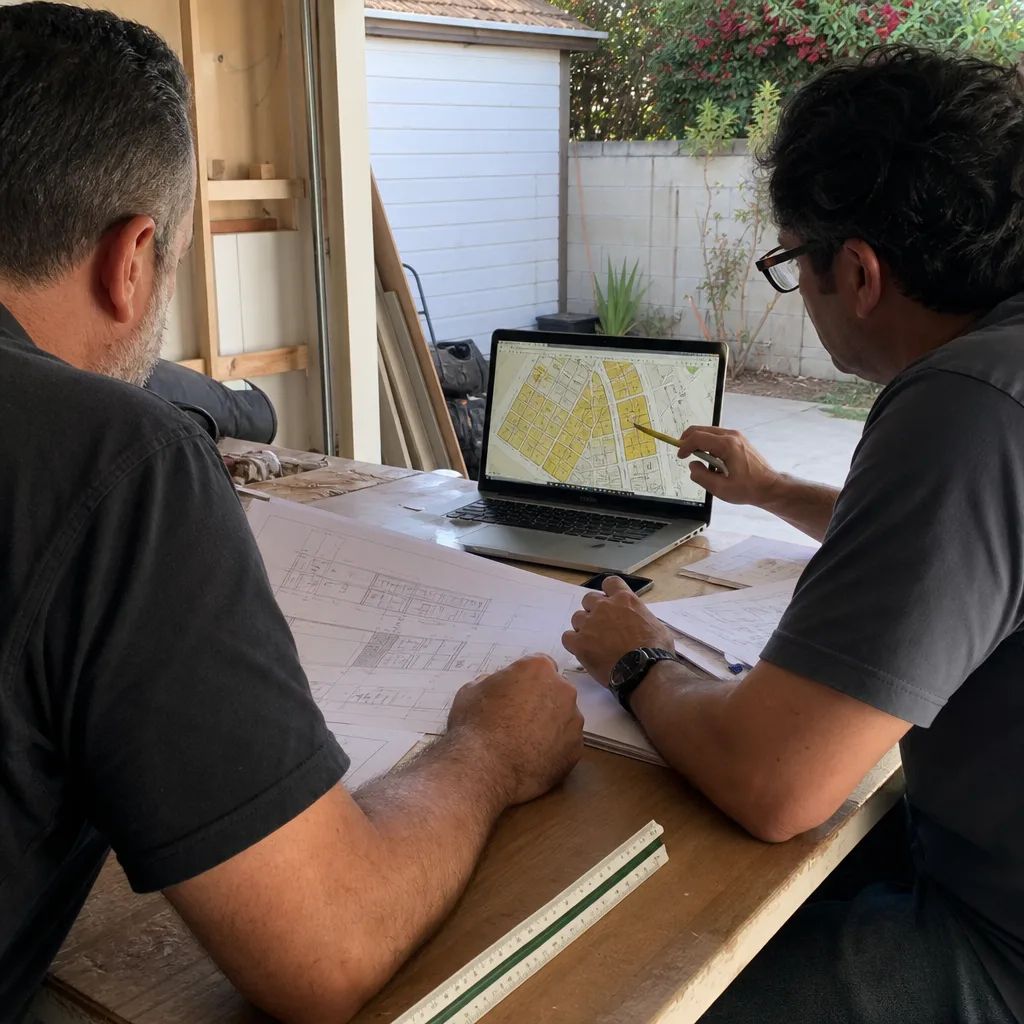
There is no safe DIY path for electrical service upgrades or gas line work in California. These are C-10 and C-36 licensed trades, and LADBS will not issue the Certificate of Occupancy without permits pulled by a licensed contractor and signed off by inspector. We’ve been called to Westchester jobs where a handyman ran the feeder in PVC above ground, or where the sewer lateral was trenched at 18 inches instead of the required 30-inch minimum cover. Both required complete removal and re-do at full cost.
What an owner can safely check: confirm your main panel amp rating (printed on the label), walk the proposed utility path and note mature trees or existing hardscape, and request a copy of your sewer lateral video from the last home sale inspection. Bring those to our consultation. We’ll tell you exactly what’s needed, in writing, with a price.
Call (213) 698-7591 to schedule your free estimate. We bring the permit set first. Everything else is a conversation about sequence.
FAQs
A properly installed pad and utility package should last the life of the structure, 50+ years, but Westchester’s clay soil and occasional seismic movement mean we specify fiber-mesh reinforcement in the pad and flexible connections at the sewer lateral to absorb settlement. Call (213) 698-7591 for an exact quote on your soil conditions - estimates are free.
Partial repair is possible for isolated issues: a cracked pad section can be epoxy-injected if the anchor bolts remain plumb, and a single damaged conduit run can be pulled without replacing the full service. But if the underlying issue is undersized service, inadequate soil prep, or a failing sewer lateral, repair is throwing money at a systemic problem. We document what we find with photos and explain which path makes financial sense. Call (213) 698-7591 for a Free Second Opinion on any written estimate already in hand.
Once permits are issued, 5-10 business days for most Westchester lots. LADWP meter appointments add 2-4 weeks to the electrical upgrade timeline, and we coordinate that scheduling as part of our single contract. The permit set comes first. Everything else is a conversation about sequence.
We stock the common items: anchor bolt templates, 1.5-inch electrical conduit and pull boxes, 125-amp subpanel adapters, and the flexible sewer connection kits Abodu specifies. Custom items like transformer upgrades or long gas runs we order to spec once the load calc is complete. We’re an independent service provider, not affiliated with Abodu, but we’ve specified and coordinated their units since they entered the Los Angeles market.
Written by Nadia Ellery, Owner, Ellery ADU Studio Westchester at Ellery ADU Studio Westchester, serving Westchester and nearby areas.